
“Yesterday, December seventh, 1941, a date which will live in infamy, the United States of America was suddenly and deliberately attacked by naval and air forces of the Empire of Japan. We will gain the inevitable triumph, so help us God.” – Franklin D Roosevelt
In 2012 I had the wonderful opportunity of going to Hawaii not once but twice. Once was a personal vacation and the other was for work. A trip to Hawaii is not complete without a stop to Pearl Harbour. It is a pivotal part of world history, war history and American History.
My second visit to visit the USS Arizona came on December 6, 2012 just a day before the 71st anniversary of the day that changed the world. It was very different from my first visit earlier in the year. They were preparing for events for the next day, there were a lot of folks in uniforms from the Navy, Army and others. There was pomp and circumstance which enhanced the visitor experience at the memorial.
Just being at the memorial close to the anniversary was special. Inside the entrance there were a few tables set up. As I approached the table I could see by the age of this gentle man in a Hawaiian shirt with a navy cap on that he was special. He turned out to be very special. His name Al Rodrigues, then 92 years old, retired Naval officer and one of the 13 left survivors of the USS Arizona.

He was so kind and humble. He knows his place in history. I stood back and watched him talk to adults and children in the same way. He was sharing his experience about swimming through fire and debris and trying to escape the sinking ship. He speaks about loss and survival, destruction and more.
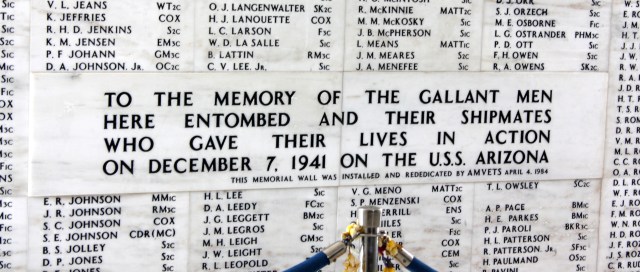
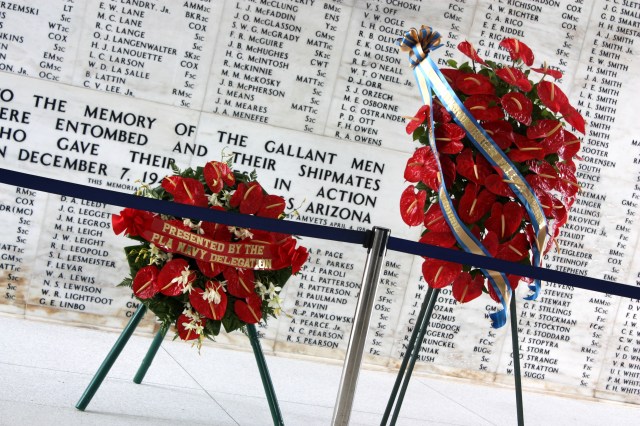
The USS Arizona represents the largest single loss of life in naval history – 1177 souls are interred in ship at the bottom of the bay. There were 23 sets of brothers on board the ship on that fateful day.
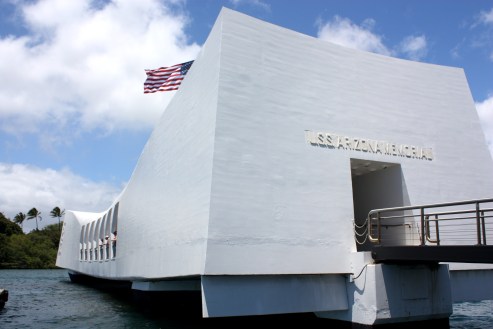
The site tour is narrated by Jamie Lee Curtis, whose father Tony, also served. You walk through the history of the lead up of the attack by the Japanese and so much more. You continue walking through the exhibits and then onto the boat to take to you the memorial.
Once on the memorial you have time to be reflective. It is a quiet place, as it is a memorial and a cemetery. Much like my experience while taking the narrated tour of Alcatraz there are moments that give you time to pause and take in the depth. She tells you to look our at the water to your left. If you can see the small bubbles floating at the top, that is oil, still leaking, 71 years later.
Today we stop and think about the events of 75 years ago. Soon all the survivors will be gone, but their stories will remain and indelible part of who we are and what can be in the future.

 The Lisa Chronicles